
Quiet Air Purifiers: The Most Clean Air per Decibel
A quiet air purifier is only useful if it still cleans the air on a setting quiet enough to leave on. Most purifiers advertise their clean air delivery rate (CADR) at top speed and their noise level at low speed. Compare them at the same amount of clean air and the gap is large: in our side-by-side test, our Luggable XL Ultra delivered about 400 CFM of clean air at about 46–47 dB, while a popular HEPA purifier needed about 64 dB to deliver the same.
Why most air purifiers are loud
A purifier cleans a room by pushing air through a filter. Dense HEPA media resists airflow, so to reach a high CADR most HEPA purifiers pair a small filter with one small, fast, powerful fan. Fast fans are loud fans. That's why so many purifiers only reach their advertised CADR on a turbo setting nobody keeps on, and why their quiet "sleep mode" delivers a fraction of the clean air.
The useful question isn't "how quiet is the lowest setting?" It's "how much clean air do I get at a noise level I'll actually live with?"
Same clean air, a fraction of the noise
We tested a popular, well-reviewed HEPA purifier against our Luggable XL Ultra at the same clean air output, about 400 CFM:
| Popular HEPA purifier (turbo) | Luggable XL Ultra | |
|---|---|---|
| Clean air delivered | About 400 CFM | About 400 CFM |
| Noise | About 64 dB | About 46–47 dB |
| Power | About 49 W | About 15 W |
A difference of about 17 dB is large: as a rule of thumb, every 10 dB sounds about twice as loud, so the HEPA unit sounded roughly three times as loud. Turned down to a tolerable medium setting, its cleaning rate fell by half. Read the full HEPA vs MERV 13 comparison.
Why our purifiers are this quiet
- Many large, slow fans instead of one fast one. Our purifiers use several 120 mm Cooler Master Mobius fans. Spreading the work across more fans lets each one spin slower, and PC fans have been refined for quietness by a very competitive industry. In our testing, the Mobius fans ran a couple of decibels quieter than competing fans at our operating points.
- Big filters that air flows through easily. Large MERV 13 furnace filters resist airflow far less than a small HEPA cartridge, so the fans don't have to work hard. Slower air through the filter also helps it catch more fine particles.
- Efficient by design. The same low resistance is why the Luggable XL Ultra is Energy Star certified at 26.2 CFM per watt, and uses only about 81 kWh a year running at full speed around the clock. See the Energy Star results.
What independent reviewers found
HouseFresh, which buys and tests air purifiers itself, called the Luggable XL Ultra "the quietest high-CADR air purifier I've tested so far".
Which quiet purifier is right for you?
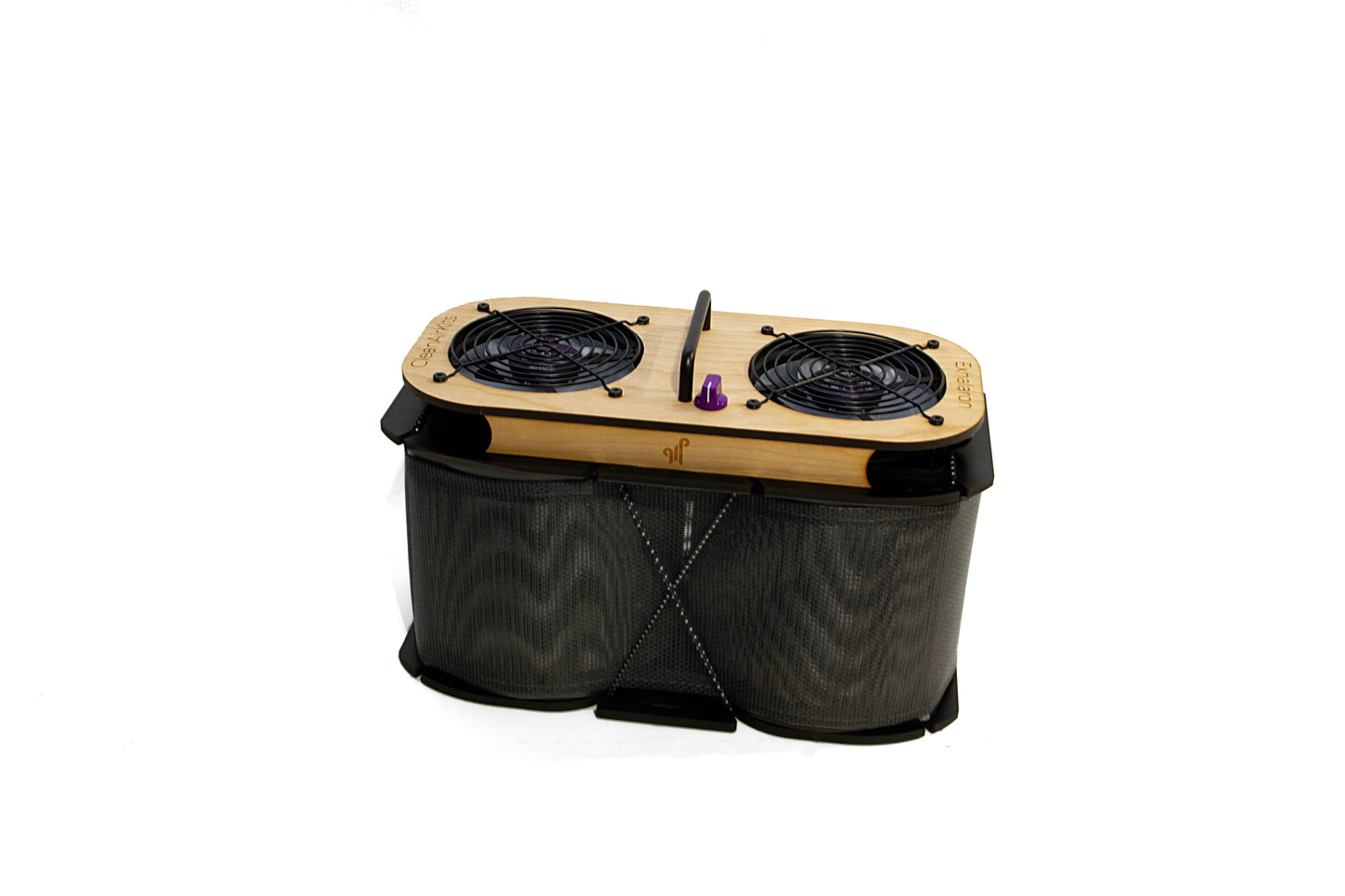
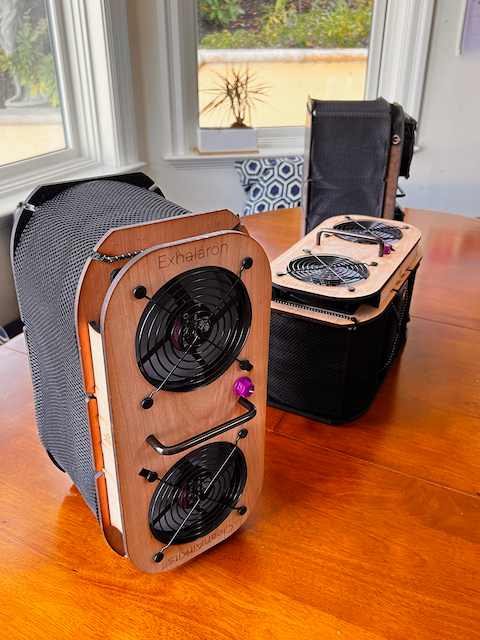
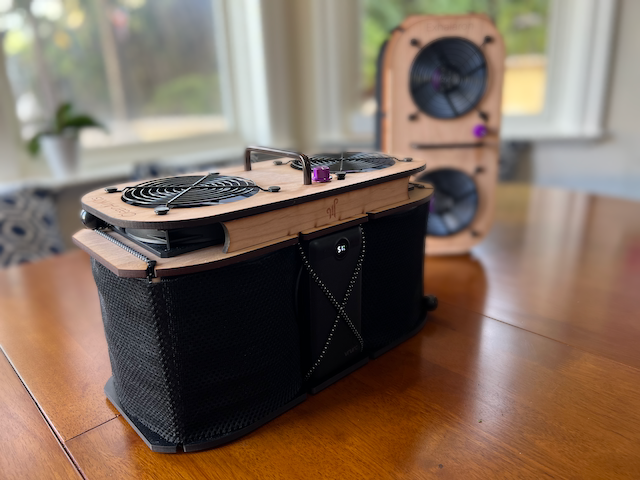
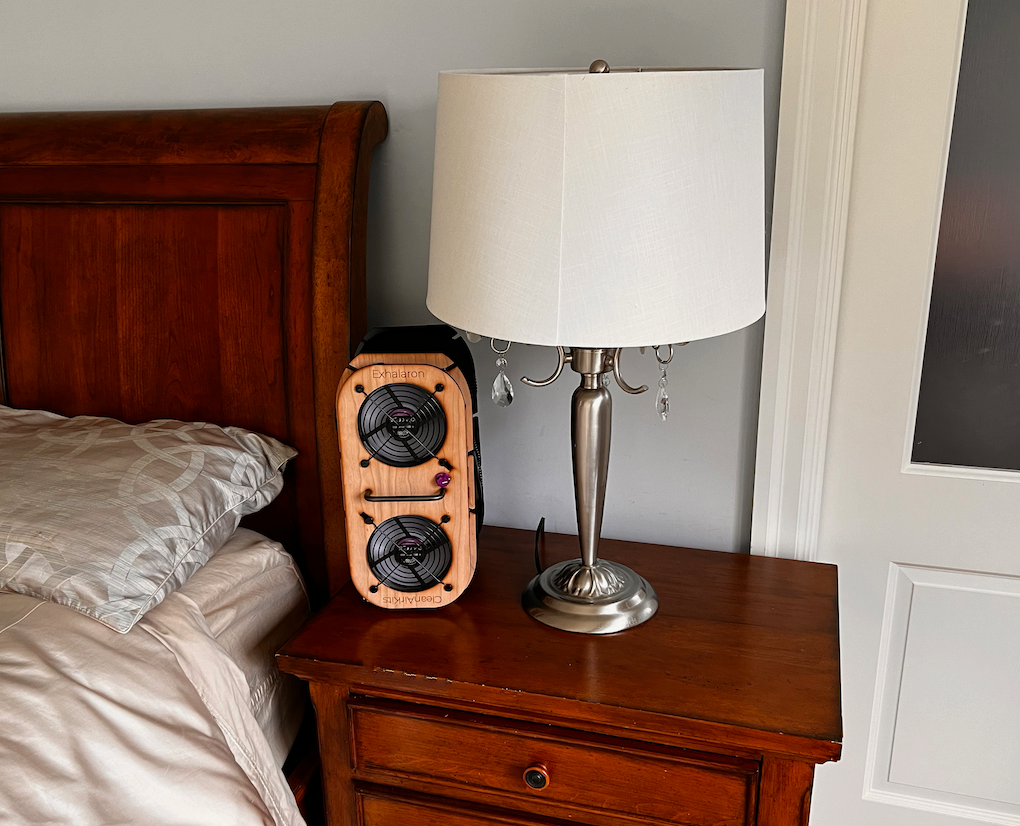
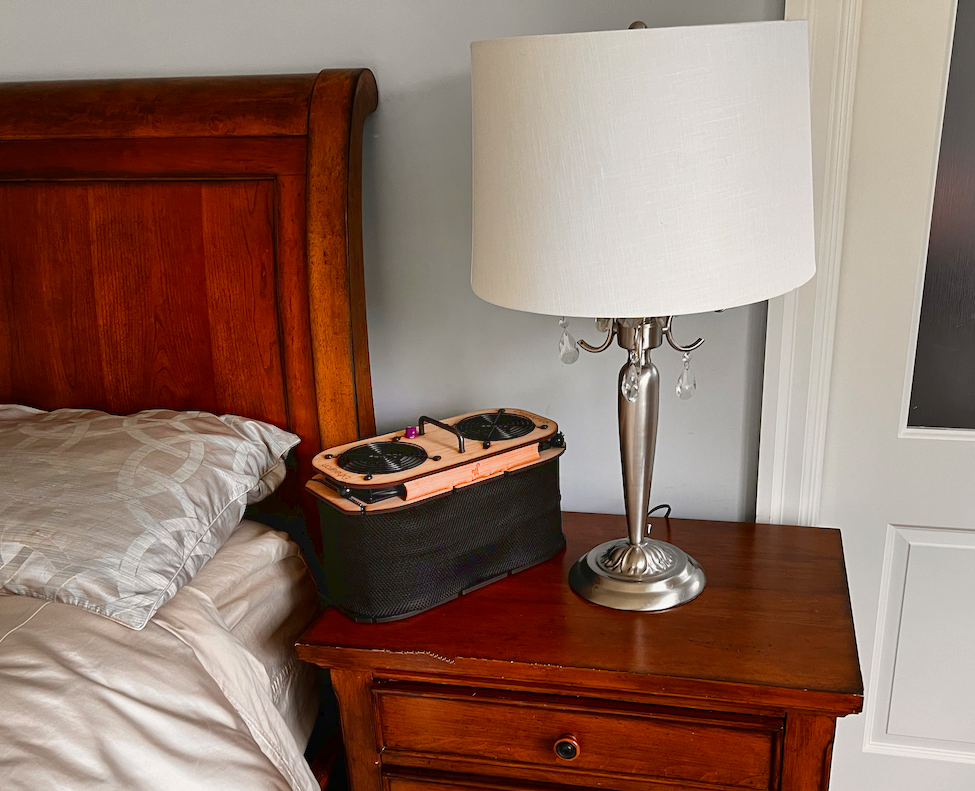
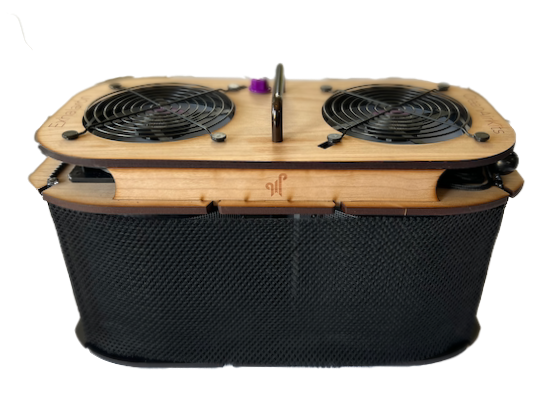
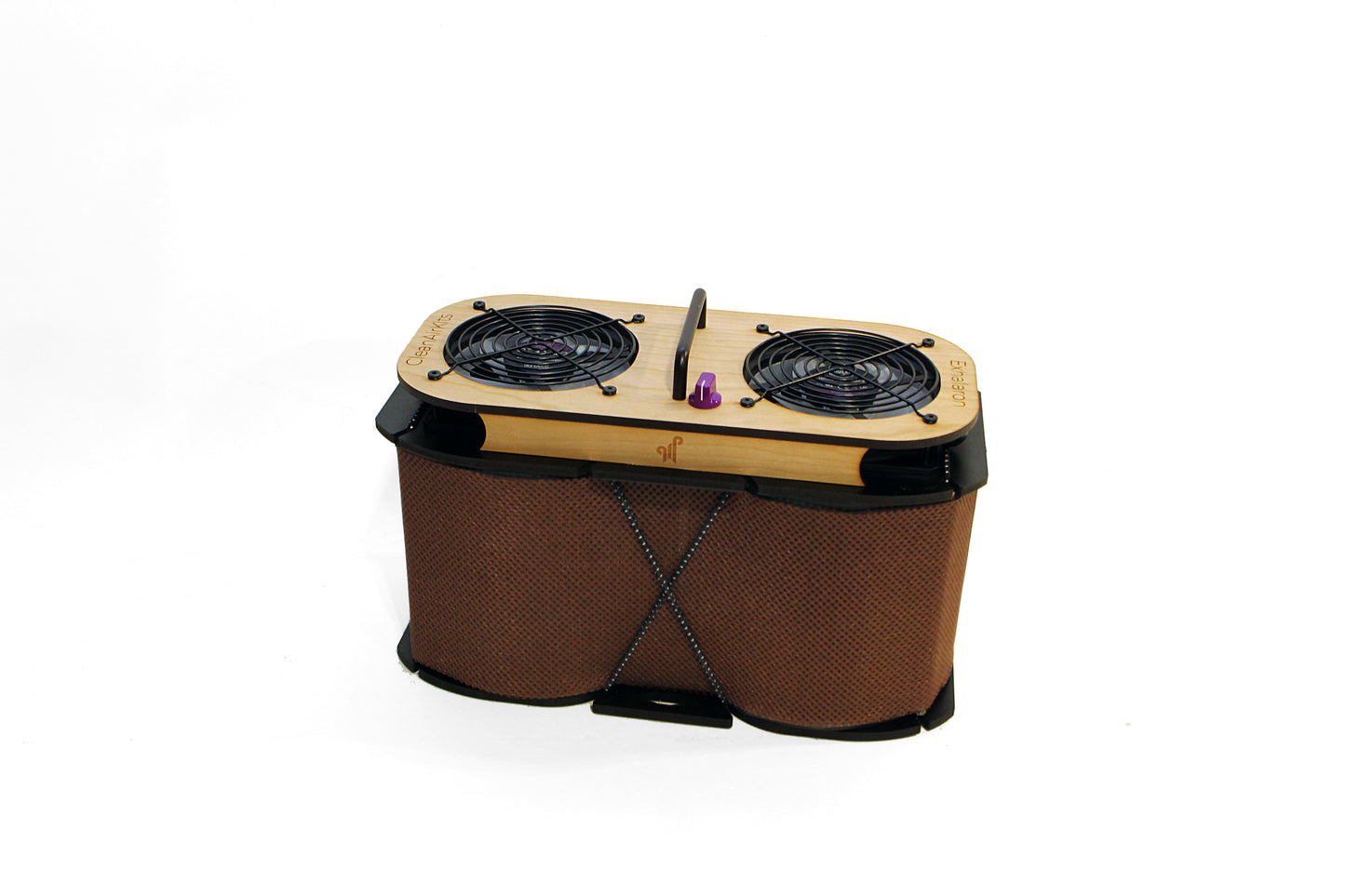
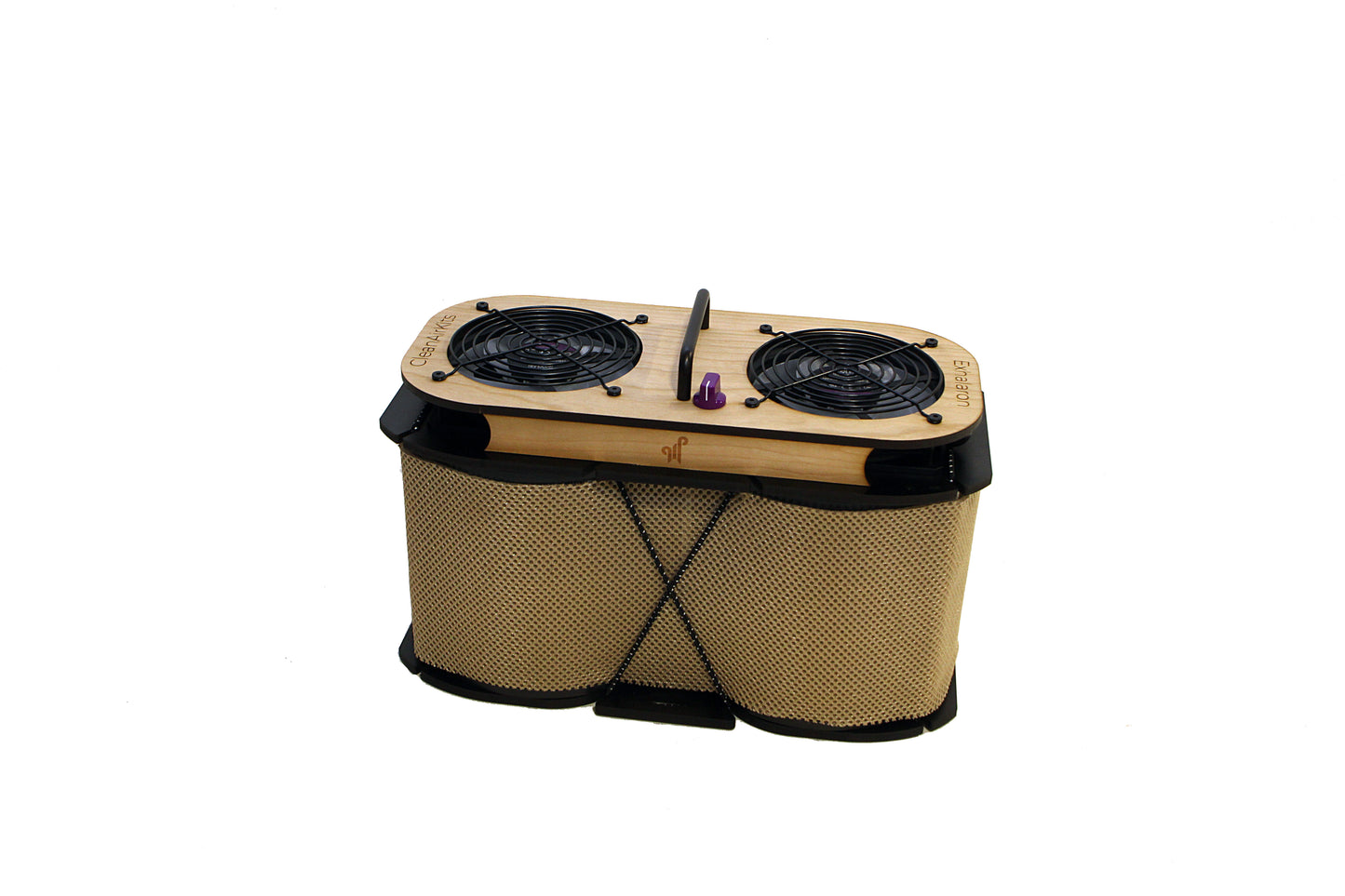
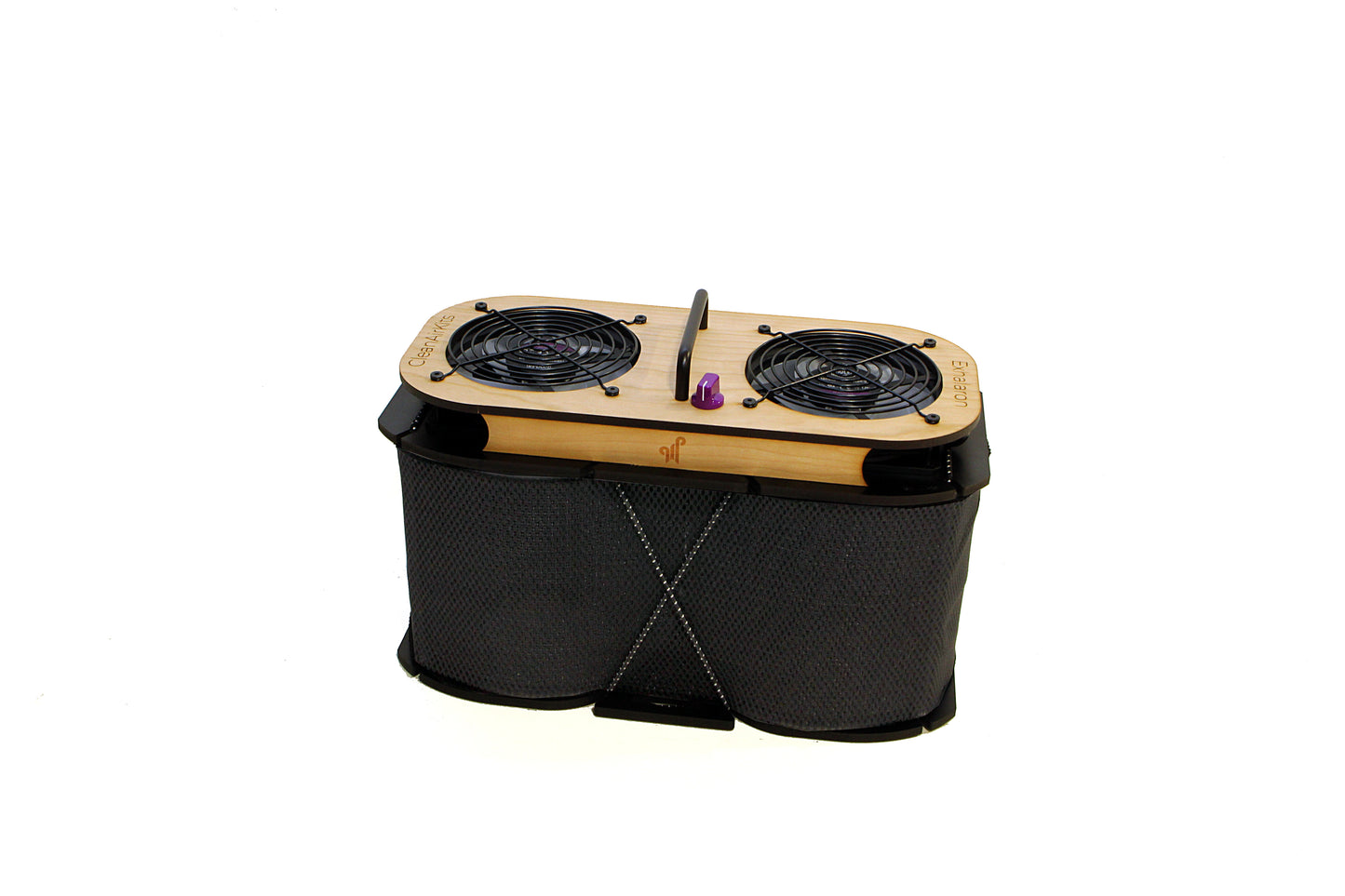
- Desk, bedside or car: the Exhalaron delivers 92 CFM at 34 dB, has a speed knob, and runs from a USB-C power bank.
- Bedrooms and home offices: the Luggable Ultra (5-fan), at about 7 inches deep, fits against a wall or beside a bed.
- Living rooms, open-plan spaces and classrooms: the Luggable XL Ultra (7-fan), about 400 CFM at about 46–47 dB.
Not sure how much clean air your rooms need? Our Air Purifier Planner recommends a kit room by room.
Frequently asked questions
How quiet is quiet enough?
Quiet enough that you leave it running. Purifiers only clean the air while they're on, and particles keep arriving all day, so a purifier switched off because it's annoying does nothing. Judge noise at the clean air output you need for your room, not at the lowest setting.
Can I run it all night?
Yes, and you should. Our purifiers are designed to run continuously. At about 15 W, the Luggable XL Ultra costs very little to run around the clock.
Is a quieter purifier less effective?
Not necessarily. Effectiveness is CADR. A purifier that's quiet only because it moves little air is less effective. Ours are quiet because they move a lot of air slowly through large filters.


Exhalaron Personal Portable Air Purifier