
HEPA vs MERV 13: Which Air Purifier Cleans a Room Faster?
Short answer: for cleaning the air in a room, the number that matters is how much clean air a purifier delivers per minute, its Clean Air Delivery Rate (CADR). It is not the percentage a filter catches in one pass. A MERV 13 purifier with large filters and quiet fans usually delivers more clean air at a livable noise level, for less energy and lower filter cost, than a typical "True HEPA" (H13) purifier. HEPA works. It just isn't the most efficient way to clean a whole room.
Watch: the videos that started the conversation
In 2024, Alex Kessler of Healthy Home Guide interviewed our co-founders Wayne Westerman and Rob Wissmann for a video that has now passed a million views, and followed up a year later. Neither video was sponsored. (Alex is now a Clean Air Kits affiliate, with code ALEXKESSLER.)
CADR: the one number that tells you how clean your air will be
Particles are always being added to your air from outdoors, cooking, pets, people moving around and more. A purifier lowers the concentration only if it removes particles faster than they arrive. CADR measures that removal rate in cubic feet per minute (CFM): how much perfectly clean air the purifier is effectively adding to the room.
The simplest way to picture it: in an hour, a high-airflow MERV 13 purifier passes the room's air through its filters many more times than a low-airflow HEPA unit. Catching a bit less on each pass doesn't matter much when the air goes around more often. Wayne's analogy is washing a car: a garden hose with plenty of water gets the car clean faster than a fancy spritzer, even if each drop of the spritzer's solution is more potent.
How can a 99.97% HEPA filter still leave a room dirty?
HEPA's famous 99.97% figure is single-pass efficiency: the share of particles caught the one time air goes through the filter. The air coming out of a HEPA purifier is very clean, but in most home units that clean stream is small, because HEPA media resists airflow. That small stream mixes straight back into the room's dirty air.
To get a high CADR through restrictive HEPA media, a manufacturer has two choices: a big, powerful fan (loud and power-hungry) or a very large filter (bulky and expensive to replace). That's why many HEPA purifiers only reach their advertised CADR on their highest, loudest setting.
We saw this in our own side-by-side test. A popular, well-reviewed HEPA purifier and our Luggable XXL both measured about 400 CFM CADR. The HEPA needed its turbo setting to get there, at about 64 dB and 49 watts. The Luggable did it at about 46–47 dB and 15 watts. When we turned the HEPA down to a tolerable medium setting, its cleaning rate fell by half (from about 4.5 to 2.4 air changes per hour). Our rule of thumb: if a HEPA purifier lists a CADR, expect about half that at a noise level you'd actually live with.
Many HEPA brands don't publish CADR at all. When a single CADR number is given, it's usually from the highest speed.
What MERV 13 filters actually catch
EPA's chart of MERV ratings shows a MERV 13 filter catching about 90% of particles from 3 to 10 microns and 85% from 1 to 3 microns in a single pass, but only about 50% from 0.3 to 1 micron. That last number is what makes people reach for HEPA.
But in a room, single-pass efficiency is multiplied by airflow. With four large furnace filters, a Corsi-Rosenthal-style purifier moves so much air that it removes more total particles per minute, including fine PM2.5, than a HEPA unit pushing a thin stream through dense media. Across particle sizes, CADR, not filter grade, is what predicts how clean your air gets.
Ultrafine particles, nanoplastics and the "0.3 micron" myth
The most common objection we hear is that only HEPA can catch ultrafine particles (smaller than 0.1 micron). It's true that HEPA captures ultrafine particles very well. What's rarely mentioned is why: every fibrous filter is worst at about 0.3 microns, the most penetrating particle size (MPPS), and gets better at both larger and smaller sizes. Very small particles bounce around randomly and stick to fibers easily.
MERV filters behave the same way. Laboratory measurements of MERV-rated HVAC filters (Azimi et al.; Stephens and Siegel) show removal efficiency climbing toward 100% as particles get ultrafine. Inside an actual Corsi-Rosenthal box, Myers et al. found CADR was lowest at about 0.3 microns and increased as particles got smaller, down to 0.01 microns.
Filters catch particles by size, not by what they're made of, so the same physics applies to nanoplastic and microplastic particles in the air.
Why bigger filters work better: face velocity
The faster air rushes through a filter (its face velocity), the more particles slip through. Research such as Chang and Chen shows penetration drops as air velocity drops, especially for ultrafine particles. Corsi-Rosenthal-style purifiers spread airflow across several large filters, so air moves through them slowly. Small HEPA units running on turbo push air through faster than the conditions their 99.97% rating was tested at. In one study (Srikrishna), a HEPA unit measured below 99.97% efficiency at high speed.
What the research says about DIY and MERV 13 purifiers
- Home offices and classrooms (Dal Porto et al.): a box-fan Corsi-Rosenthal box with MERV 13 filters delivered about 600 CFM CADR on its lowest speed, much more than two commercial HEPA purifiers on maximum, at roughly one-tenth the initial cost per unit of clean air.
- Best-in-class HEPA comparison (Srikrishna): a MERV 13 CR box on low beat a top HEPA purifier on high at the most penetrating particle size, at about one-fifth the component cost.
- Wildfire smoke (Holder et al.): a MERV 13 CR box far outperformed a commercial HEPA purifier in CADR, initial cost per CADR and CADR per watt. Smoke-loaded filters lose CADR, so change filters more often during smoke season.
- Airborne viruses (EPA, Ratliff): in a 3,000 cubic-foot test chamber, a MERV 13 CR box removed 97% of an aerosolized test virus in 30 minutes and 99.4% in 60 minutes, at a CADR of 234 CFM.
- Evidence review (NCCEH): across many studies, DIY MERV 13 purifiers consistently beat commercial HEPA units on CADR, cost per CADR and CADR per watt.
Energy Star: the most efficient air purifier we know of
Energy Star certification measures clean air delivered per watt. Our Luggable XL Ultra is Energy Star certified at 26.2 CFM per watt with Filtrete MPR 1900 (MERV 13) filters, about 2.4 times the next most efficient large purifier in the Energy Star database. Running at its full 402 CFM dust CADR all year, it uses only about 81 kWh. Nothing in the Energy Star standard requires HEPA. Less restrictive filters with lots of area simply take less energy to push air through. Read the full Energy Star results.
Quieter than a box fan: why we use PC fans
Box-fan Corsi-Rosenthal boxes work, but they're loud on high. PC fans have been refined by a very competitive industry for quietness and efficiency. We tested the leading 120 mm static-pressure fans and chose Cooler Master's Mobius fans. They run a couple of decibels quieter than competitors at our operating points and are UL-registered, which let us pursue UL 507 certification for classrooms. Our purifiers can match a CR box on low-to-medium speed using a fraction of the energy and at least 10 dB less noise.
So, are HEPA air purifiers a scam?
No filter type is a scam, and HEPA filters do exactly what their rating says. The problem is how they're packaged and marketed for rooms: restrictive media, small fans and a 99.97% headline that isn't the right measure for a room purifier. That combination often means less clean air, more noise, higher power use and pricier proprietary filters than you'd expect.
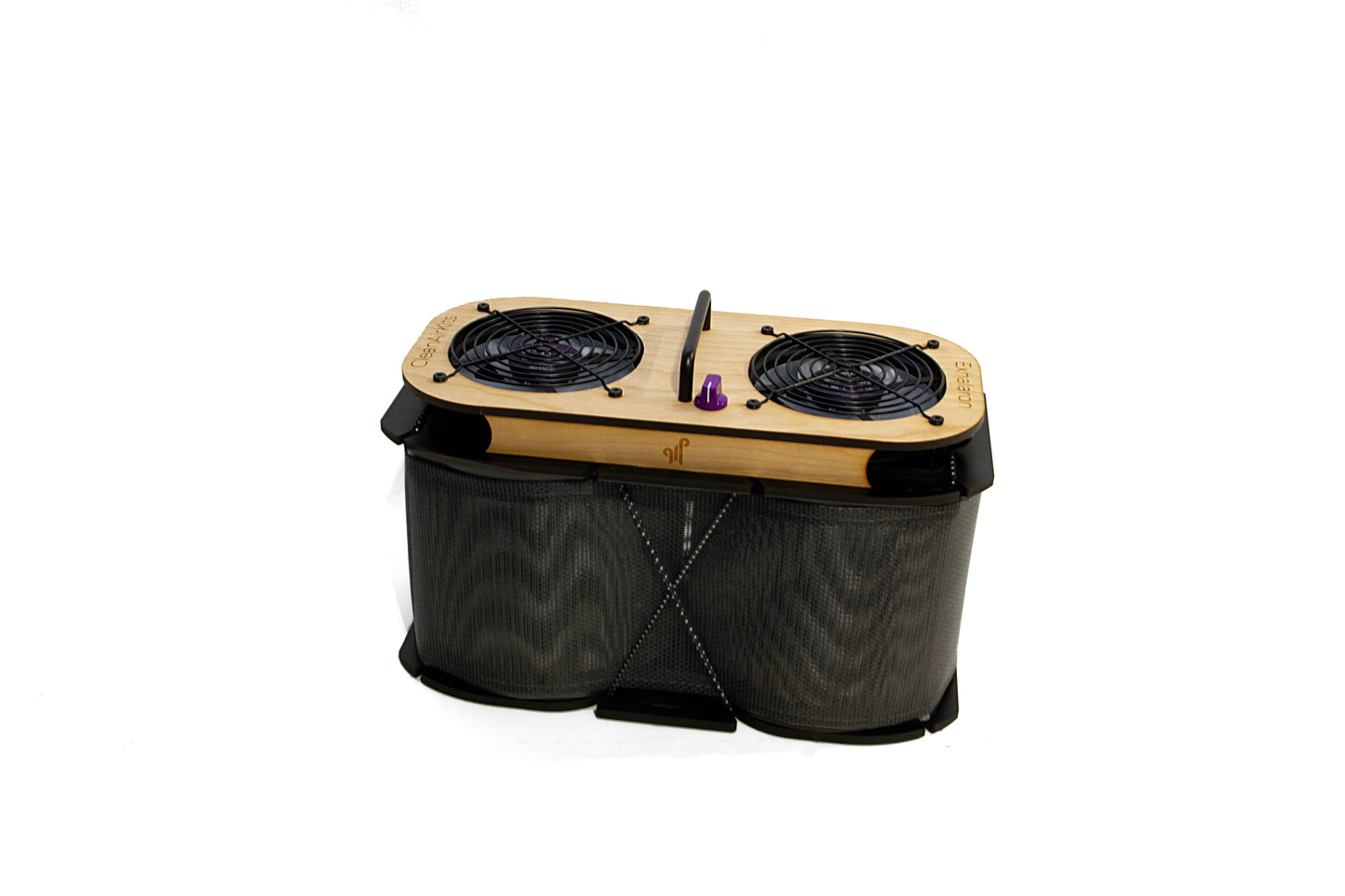
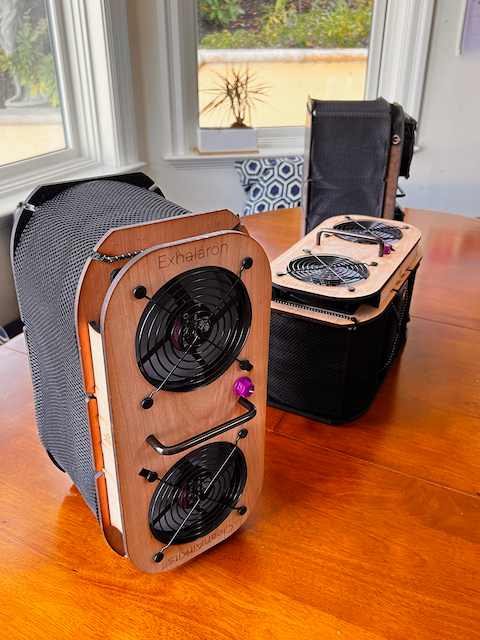
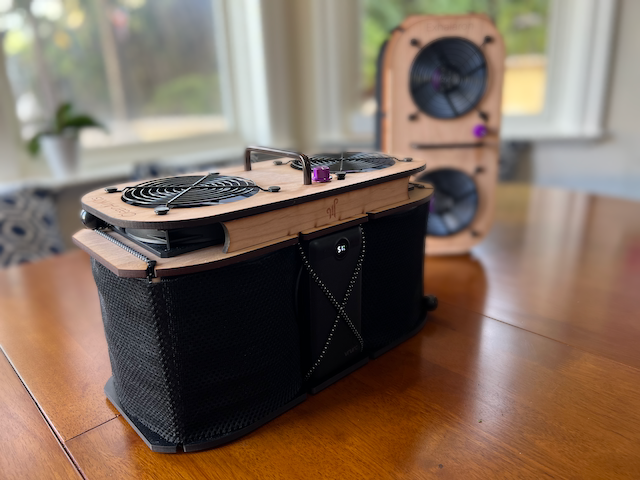
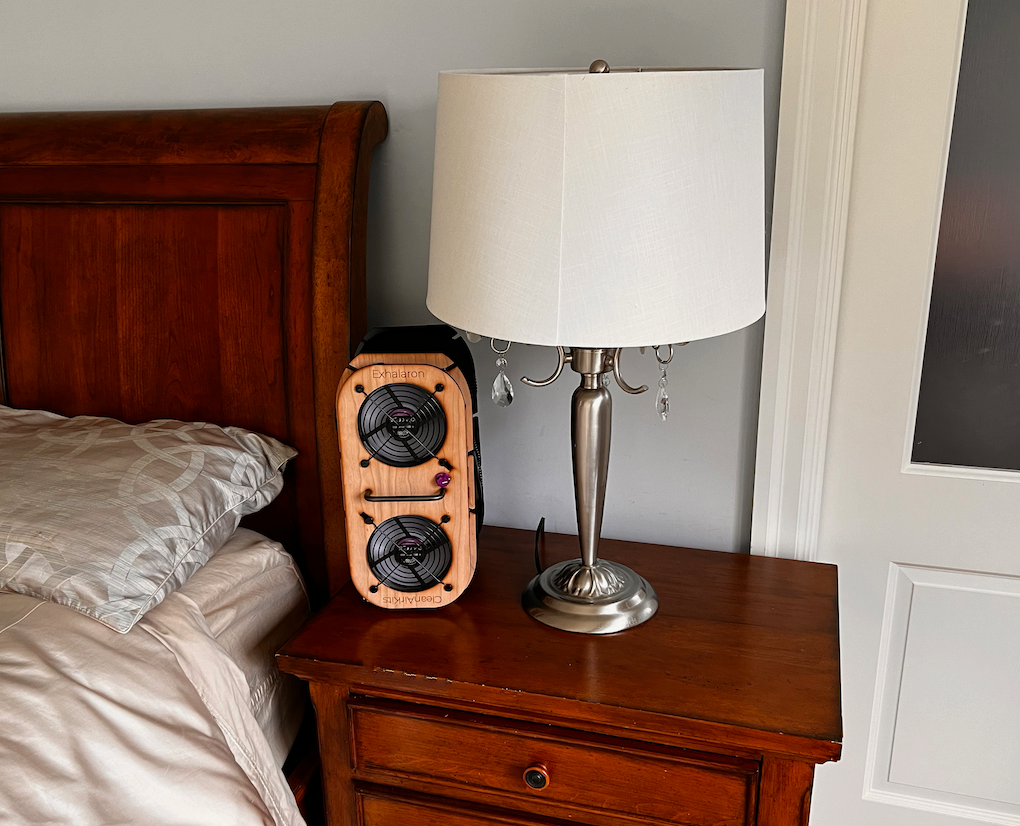
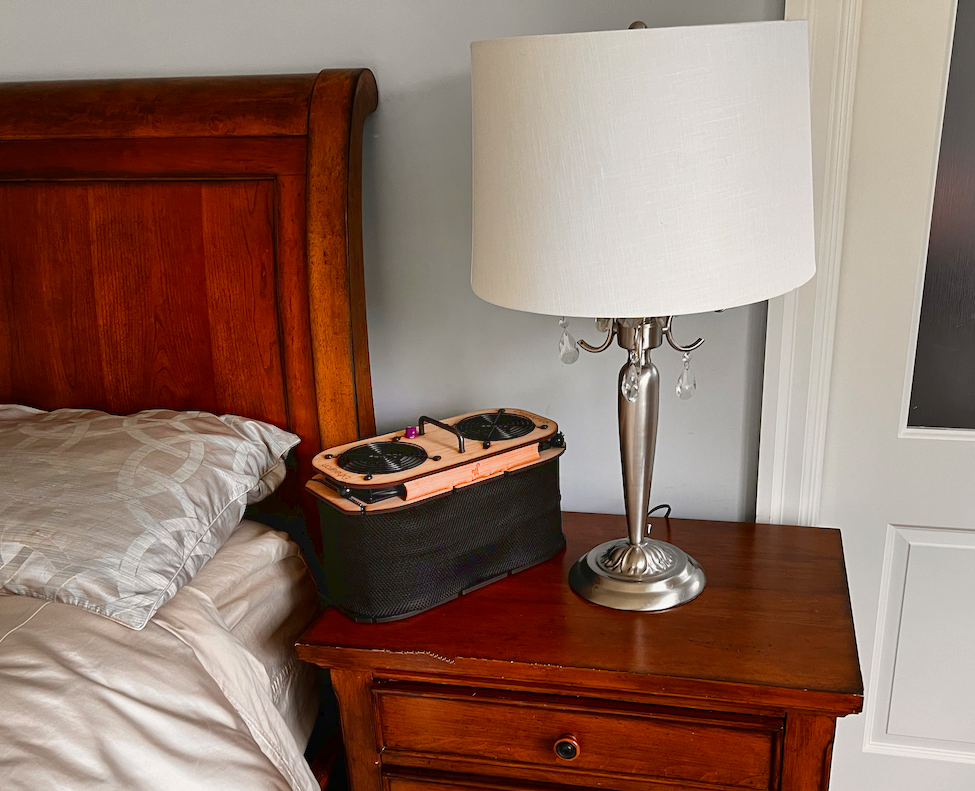
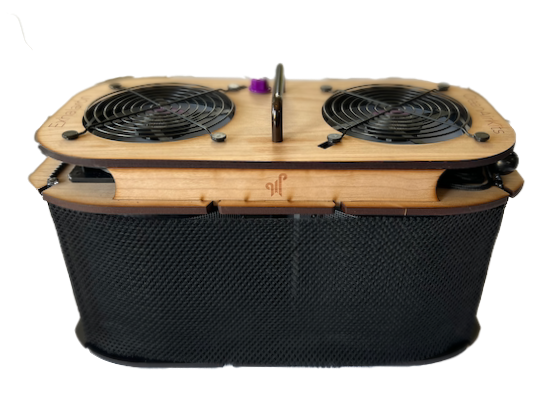
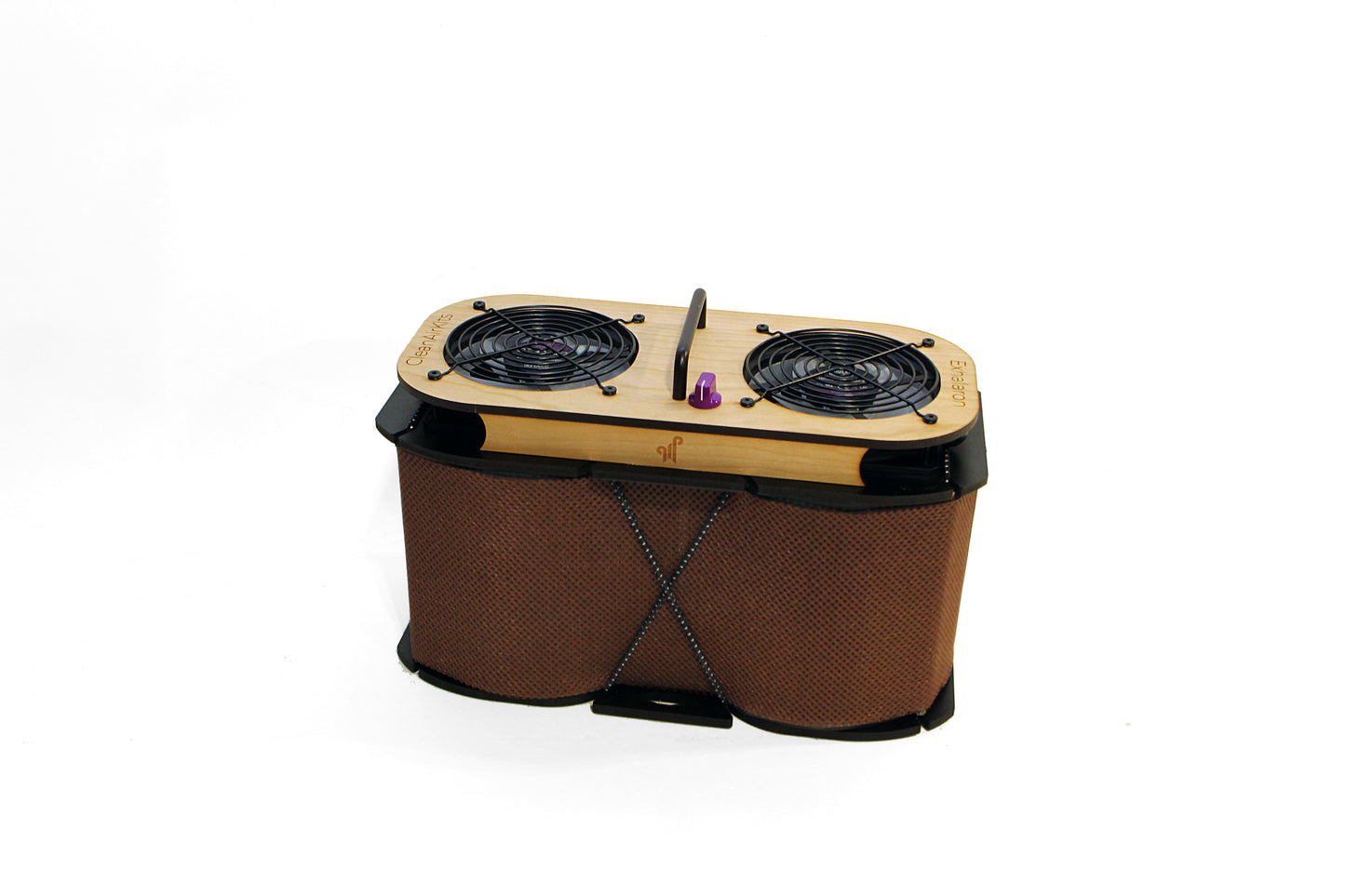
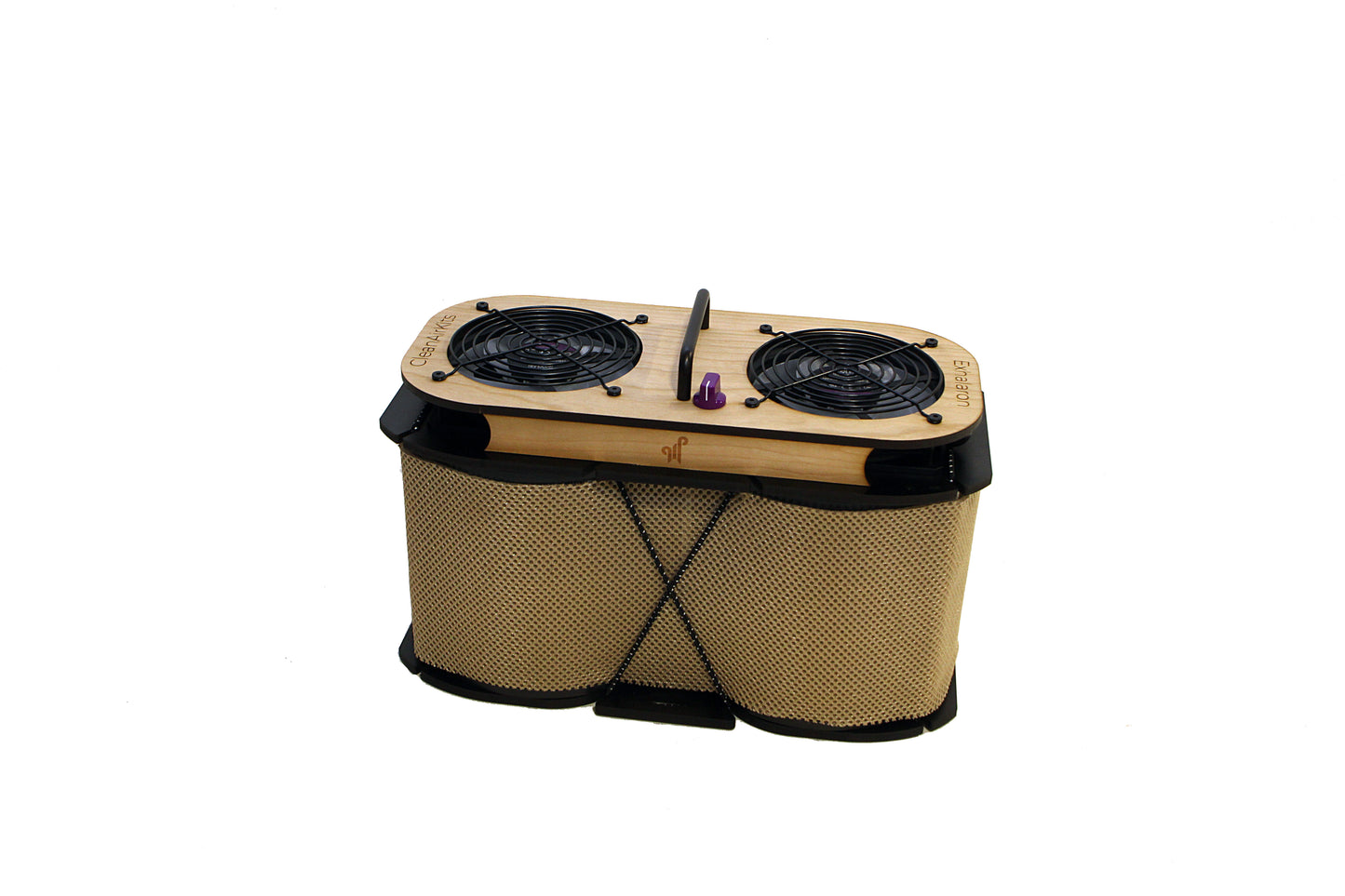
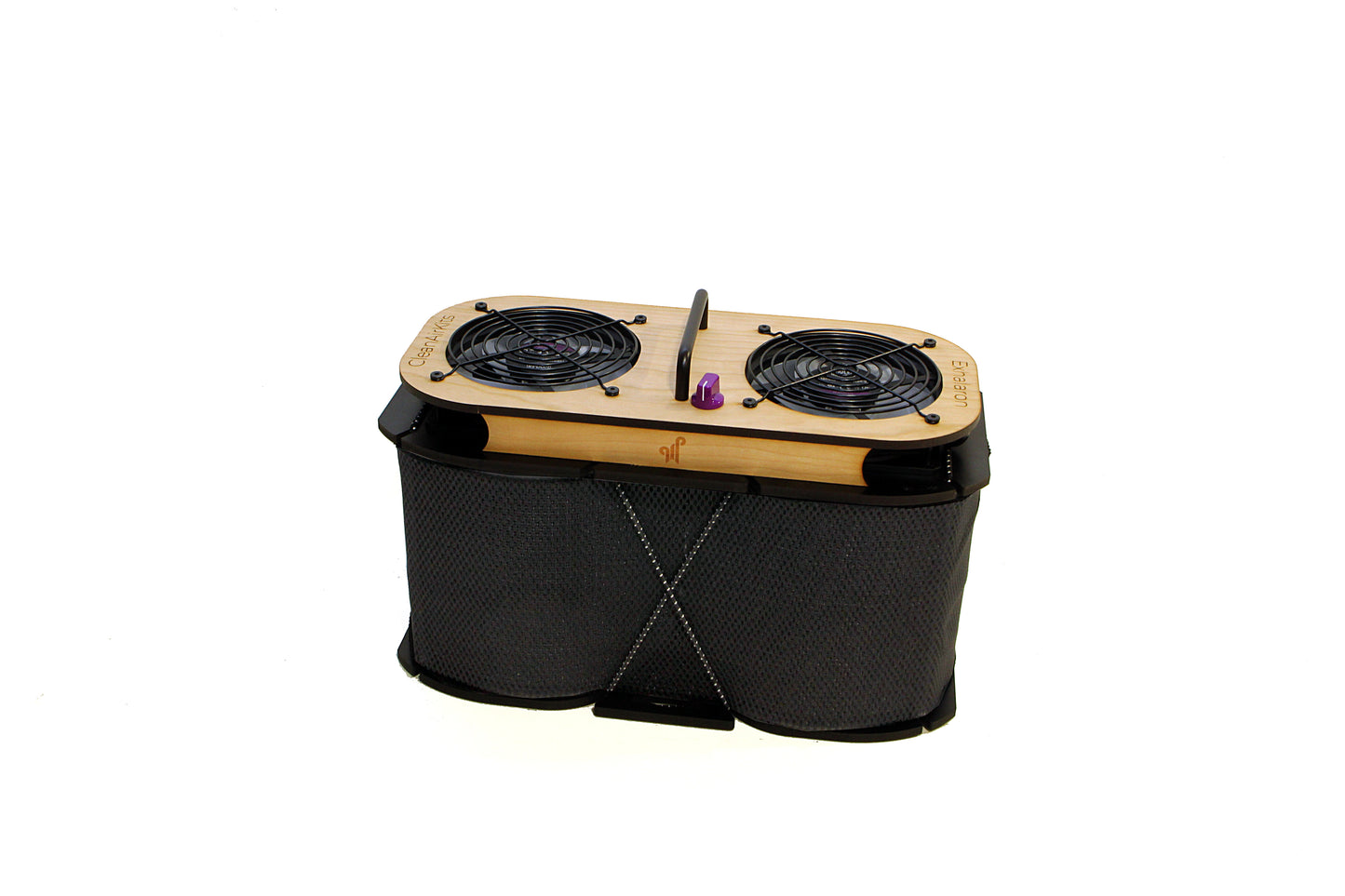
Some HEPA purifiers are good, especially those using less restrictive grades like H11 with plenty of airflow. Our own Exhalaron and Triple Exhalaron use EPA H11 media for exactly that reason. In a compact cylindrical design, H11 gave us a higher CADR per watt than H13. When we tested H13, we lost our efficiency advantage.
When HEPA is the right tool
High single-pass efficiency matters when air only goes through the filter once, or when you need to keep a clean space separate from a dirty one:
- Vacuum cleaners: exhaust air passes through once, so a HEPA filter keeps floor dust from being blown back into the room.
- Cleanrooms and some hospital settings: carefully controlled airflow with powerful blowers designed to overcome HEPA's resistance.
In an ordinary home, office or classroom, where purified air immediately mixes with the rest of the room, total clean air per minute matters more.
Filter questions we hear most
Can I use MERV 11, 12 or 14 instead of MERV 13?
Yes. We tested Filtrete MPR 1085 (MERV 11), 1500 (MERV 12), 1900 (MERV 13) and 2500 (MERV 14) in our Luggables, and all are acceptable alternatives to MPR 1900. MPR 1500 did surprisingly well. See the filter-grade test.
Why not MERV 15–16, or a box of HEPA filters?
Higher grades are more restrictive. With the same fans, airflow drops, and so does CADR, unless you add a lot more filter area or fan power, which means more noise or cost. MERV 13 sits at the sweet spot for quiet PC fans.
MERV 13 isn't sold where I live. Will H11 work?
Often yes. H11 is less restrictive than H13 and works well when there's enough filter area for your fans. Filtrete MERV 13 filters are also sometimes available internationally through Digi-Key.
Why not use both a MERV 13 purifier and a HEPA purifier?
You can. Clean air from any purifier adds up. If you already own a HEPA unit, keep using it alongside a high-CADR MERV 13 purifier.
Do MERV 13 purifiers work for mold spores?
Most mold spores are several microns across, a size range where MERV 13 filters catch the large majority of particles in a single pass, and high airflow keeps cycling the room's air through the filters. For anyone dealing with mold, fixing the moisture source and controlling humidity come first. Read our mold guide.
Do I need an activated carbon filter or a prefilter?
Carbon targets gases, odors and VOCs, not particles, and it saturates over time, often with little information on how long it lasts. For odors and VOCs, ventilation with fresh outdoor air is usually the most effective approach. Separate prefilters are generally unnecessary with large furnace filters, which are inexpensive to replace. Our Exhalaron filters do include a carbon layer.
How much clean air do you need?
- Everyday rule (AHAM): CADR of at least two-thirds of the room's area in square feet. A 12 × 15 ft room (180 sq ft) needs at least 120 CFM.
- Wildfire smoke: CADR at least equal to the room's square footage.
- Sensitive people: closer to twice the room's square footage, using more than one purifier if needed.
- Infectious aerosols (ASHRAE 241): 30 CFM per person for homes and offices, 40 CFM per person for classrooms.
Our Sizing Guide lists coverage for every model.
Does a PC-fan purifier really clean the whole room?
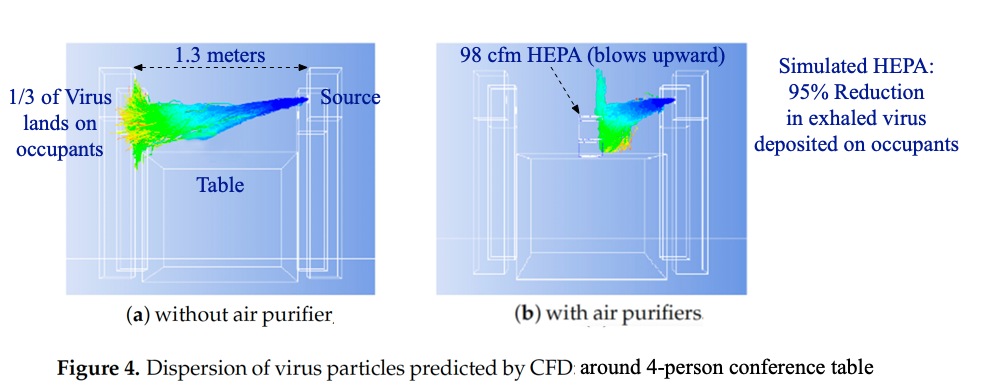
Yes. Clean air spreads through a room much like cigarette smoke does: there's no corner smoke can't reach, and there's no corner clean air can't reach either. We've measured this with particle counters across a 600 sq ft apartment, and in a side-by-side test our Luggable's fans, facing different directions, spread clean air more evenly than a comparable HEPA unit. See the room-mixing test and the HEPA comparison.
Find the right purifier
- Shop all purifiers
- Air purifiers for wildfire smoke
- Air purifiers for mold
- Allergen-free zones for allergies
- Classroom air purifiers
References
- Dal Porto et al. (2022), Characterizing the performance of a do-it-yourself (DIY) box fan air filter, Aerosol Science and Technology
- Srikrishna (2022), Price-performance comparison of HEPA air purifiers and lower-cost MERV 13/14 filters with box fans, published in Science of the Total Environment
- Holder et al. (2022), Impact of do-it-yourself air cleaner design on the reduction of simulated wildfire smoke in a controlled chamber environment, Indoor Air
- Ratliff (U.S. EPA, 2023), EPA ORD's Corsi-Rosenthal Box Bioaerosol Testing Results
- Myers et al.: size-resolved CADR of Corsi-Rosenthal boxes
- Azimi, Zhao and Stephens (2014), Estimates of HVAC filtration efficiency for fine and ultrafine particles of outdoor origin, Atmospheric Environment
- Stephens and Siegel: ultrafine particle removal by residential HVAC filters, Indoor Air
- Chang and Chen (2016), Capture of sub-500 nm particles using residential electret HVAC filter media, Aerosol and Air Quality Research
- National Collaborating Centre for Environmental Health (NCCEH), Do-it-yourself (DIY) air cleaners: Evidence on effectiveness and considerations for safe operation
- Joey Fox, It's Airborne: Introduction to Air Filtration and related articles on HEPA, CADR and choosing an air cleaner


Exhalaron Personal Portable Air Purifier