


Capturing Mold Spores with High CADR Filtration
Managing mold starts with addressing its source and improving the conditions that allow it to grow. The range of products at CleanAirKits helps you tackle mold-related challenges with solutions designed to capture airborne mold spores and fragments, improve indoor air quality, and support a cleaner indoor environment.
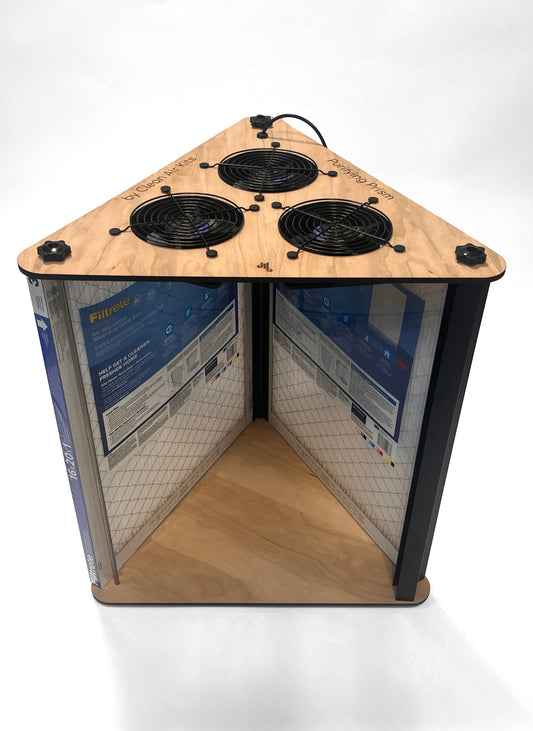
With high-CADR air purifiers like the Luggable XL Ultra and the Purifying Prism, manage moisture and support mold prevention during remediation, cleanup, and ongoing maintenance.
Which one should you get?
-
 Basements & Bigger SpacesShop for larger spaces
Go with a Luggable XL Ultra or Brisk Box Ultra (8-Fan) for larger spaces where moving more air is the priority.
-
 Bedrooms & Medium-Sized RoomsShop Brisk Box
The Brisk Box (3-Fan) is our most affordable DIY air purifier and a great fit for bedrooms and medium-sized rooms.
-
 Small Rooms, Vehicles, and Near OdorShop Exhalaron
The Exhalaron iis a good fit for small rooms, nightstands, vehicles, or placed next to your stove while cooking to capture smoke and odors right at the source thanks to its added carbon layer.


Featured Purifiers
-
Luggable Ultra Air Purifier (5-Fan)
Regular price $229.00 USDSale price $229.00 USD Regular priceUnit price per$189.00 USD -
Luggable XL Ultra Air Purifier (7-Fan)
Regular price $299.00 USDSale price $299.00 USD Regular priceUnit price per$259.00 USD -
Purifying Prism (3-Fan)
Regular price $229.00 USDSale price $229.00 USD Regular priceUnit price per -
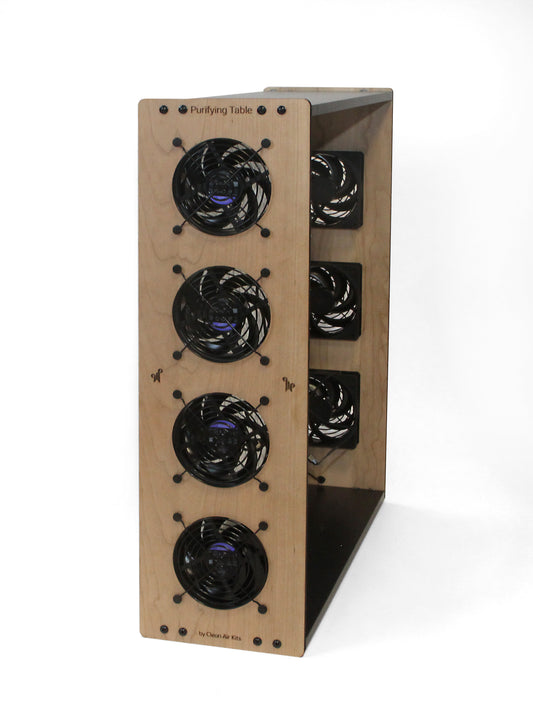
Purifying Table (7-Fan)
Regular price $399.00 USDSale price $399.00 USD Regular priceUnit price per$259.00 USD



Mold & Air Purifier FAQs
Do CleanAirKits air purifiers help with mold spores?
Yes. Spores are the largest of the airborne culprits (larger than bacteria and viruses by quite a bit).
To actually solve your mold problem, you will need to get to the cause, stop the moisture issue, and surface-clean the mold growth. But purifiers like Luggables and Brisk Box are essential while you're waiting for the remediation crew to come to your house or waiting until your DIY attempt is done.
We aren't mold experts, but wear a well-fitting P100 respirator any time you enter the area where the mold is. And use air purifiers anywhere and anytime you're not masking to capture mold spores that have floated into other parts of the house.
Will a purifier remove the musty smell?
CleanAirKits air purifiers help remove some mold and mildew smells from the air.
The Exhalaron and Triple Exhalaron filters include an activated carbon layer that helps with odors and certain gases — but they won't completely tackle a musty smell if the mold and moisture haven't been dealt with. But there are some odors that accompany larger particles, and smells from those can be significantly reduced after they are filtered.
You can also use filters with carbon (like these carbon filters) instead of our usual recommendation of Filtrete filters.
You will have slightly lower CADR, so one strategy is to use a regular filter on one side and a carbon filter on the other side. If you're still wanting more odor reduction, you can have both filters be the ones with carbon. These filters are sized just like our preferred Filtrete brand to fit snugly in the frames without foam tape.
Can mold grow on the filter itself?
Not under normal conditions.
Filters stay dry in continuous airflow (which is why you blow a regular fan at a damp area of your house to speed up drying), and dry filters don't support growth. Keep indoor humidity between 30% and 50% when you can, don't run a purifier around standing water or saturated materials, and replace filters at the recommended frequency.
Which air purifier is recommended for a damp basement or a known mold problem?
Prioritize air changes per hour over filter grade when choosing an air purifier for a damp basement.
A Luggable Ultra or Luggable XL Ultra with Filtrete MERV 13 filters moves a lot more air per watt than our Exhalaron with the equivalent of a MERV 15 and will clear the space faster.
Choose the Exhalaron line for vehicles, small rooms, portability, or when you want the carbon layer for odor.
The Longer Answer
You discover a slow leak under your sink that didn’t cause an obvious flood and went unnoticed for months, and now there’s mold under all of your floorboards. OR you can't see anything, but the basement smells musty, and you thought your allergies were causing you to have those sneeze attacks, but maybe it’s something else.
Either way, you're wondering what an air purifier can actually do about it. Quite a bit, as long as you know where its job ends. Even if you tear your house apart and never find a mold source, you’re going to want air purifiers to filter air of ALL the nasty stuff before you breathe it. Airborne mold is just one of the things; a good air purifier also filters out dust, smoke particles, viruses, bacteria, and allergens like pollen.
What does mold put into your air?
-
Spores
When someone mentions “mold in the air,” that is referring to spores. Mold spores float in the air and cause mold to spread. Filters are able to catch them because spores are particles.
-
Fragments
When mold gets disturbed, either before it’s discovered or especially during cleanup, fragments of the mold itself break off. Some mold fragments are even smaller than spores, but thanks to the electrostatic properties of Filtrete MERV 13 filters, even those can be caught with CleanAirKits air purifiers.
-
Gases
Most of the musty smell is actually coming from gases. Only carbon can tackle gases. To really handle cleaning the air from gases, you need pounds of carbon. The carbon layers in our Exhalaron filter and Triple Exhalaron filter do make a noticeable difference in removing smells, but you need pounds of carbon to tackle larger odor problems.
Some odors also cling to particles and get filtered out along with them, which can help with smells even when an air purifier doesn't contain carbon.
To really tackle larger odor problems, you need pounds of carbon, which you can get from something like this DIY build or these builds.
You can also add carbon to our box-style air purifiers by using these carbon filters instead of our usual Filtrete recommendation. This will slightly reduce CADR, so one strategy is to use a regular filter on one side and a carbon filter on the other. For more odor reduction, you can use carbon filters on both sides. These filters are sized to fit snugly in the frames without foam tape.
Some odors also cling to particles and get filtered out along with them. That's why many of our customers report that their spaces smell better after using Brisk Boxes, Luggables, and the Purifying Table, even though these purifiers don't contain carbon filters by default.
What about mycotoxins?
Mycotoxins, which are toxic compounds made by some types of mold, mostly aren't gases either. They hitch a ride on spores, fragments, and dust, so pulling those particles out of the air pulls out the mycotoxins riding on them. That’s another reason that even an air purifier without carbon can help clear your air of unsafe and harmful things.
Why does spore size work in your favor?
Every filter has one particle size it has the hardest time catching, and it's tiny (about 0.3 microns). The further a particle is from that size, the easier it is to catch.
Mold spores are WAY over on the easy side. Aspergillus and Penicillium (two of the most common indoor molds) are usually around 2–4 microns in diameter, and a few get down to a little more than 1 micron. Cladosporium is approximately 5–20 microns, and Stachybotrys (aka “black mold”) is about 8–12 microns. For comparison, a human hair is approximately 50–80 microns wide.
That's why our filters do so well with spores:
Luggables and the Brisk Boxes use Filtrete MERV 13 furnace filters. A MERV 13 filter catches at least 85% of particles between 1–3 microns and at least 90% of particles between 3–10 microns every time air passes through it. Those are minimums from a test that loads the filter up with dust on purpose, so real-world performance is usually better than the rating.
The Exhalaron and Triple Exhalaron use cylindrical H11 filters that catch more than 95% of particles at 0.3 microns (the hardest size) on the first pass, so spores are an easy job for them. Plus, the carbon in the filters helps with gases and odor.
Why does airflow matter more than filter grade?
How well a filter catches particles in one pass isn't what cleans your room. How much air the purifier moves is what cleans your room.
The air in a space goes through an air purifier over and over. A spore that slips through once can get caught on the next pass (or the one after that). So an air filter that catches 99.97% of particles but only moves 60 cubic feet of air per minute will clean a room more slowly than one that catches 90% and moves 300 cubic feet of air per minute.
The number to look at is equivalent air changes per hour (eACH), which is how many times an hour a purifier can filter all the air in the room. Our product pages list the room size each purifier covers at 5 air changes per hour, and that's a good target when mold is a concern too. Remediation pros aim for 4–6 eACH in their work areas.
To figure it out yourself, multiply the purifier's Clean Air Delivery Rate (CADR) by 60, then divide by the room's volume (length × width × ceiling height).
A 20 ft. by 25 ft. basement with 8-foot ceilings holds 4,000 cubic feet of air. A Luggable XL Ultra, with a CADR of 401 cfm, gives that basement about 6 air changes per hour. An Exhalaron, with a CADR of 92, only manages about 1.4, which is why we recommend it for small rooms instead.
What are the limitations of air purifiers?
Air purifiers can't remove mold that's growing on a surface, and they can't prevent new mold from growing. Moisture is the issue. Fix the leak, lower the humidity, dry out wet materials, and remove what's already growing.
If you dry wet or damp materials within 24–48 hours after a leak or spill, mold usually won't grow.
For a small patch (less than about 10 square feet), the EPA says most people can handle cleanup themselves. Wear a respirator. For anything larger, or if there's been a lot of water damage, bring in a professional. If sewage or contaminated floodwater is involved, call a pro regardless of the size.
And a purifier isn't containment. During professional remediation, crews seal off the work area and vent air outside so spores and fragments don't spread through the building. A purifier can help keep the air cleaner in the rest of the house while that's happening.
To learn more expert tips, read what House Fresh has to say about mold in your home here.
When does an air purifier help most?
While you're waiting for remediation or doing DIY cleanup. Run it in the rooms you're still living in to catch whatever is circulating.
During and after cleanup. Keep it running in adjacent rooms to catch particles that escape containment.
In damp spaces or during humid summers. A purifier won't control humidity, but it will continuously remove airborne spores while a dehumidifier handles the moisture.
If you're sensitive to mold. Higher air changes per hour means faster removal of airborne particles.
During outdoor mold season. Spores come inside through open doors and windows and on clothing. Continuous filtration reduces what's floating around indoors.
A few setup tips
Leave the purifier running continuously. Mold releases spores continuously while it's growing.
In a damp basement, pair the purifier with a dehumidifier. The purifier handles what's airborne. The dehumidifier handles the moisture that's feeding the problem.
Give the purifier room to breathe. Keep it out in the room and away from walls, unless you're using a Luggable Ultra or Luggable XL Ultra, which can be placed in a corner or against a wall.