
Air Purifiers for Colds, Flu, COVID & Other Airborne Illnesses
Colds, flu, COVID, RSV and many other respiratory infections spread mostly through the air. An infected person breathes out tiny virus-laden particles that drift through the room and build up over time, and the more of them you breathe in, the more likely you are to get sick. An air purifier can't stop someone breathing out virus, but it can remove those particles from the room faster, so they're less likely to build up into an infectious dose. The name of the game is cleaning rate: how much clean air reaches the room every hour.
Which illnesses spread through the air?
For most of the 20th century, doctors thought colds and flu spread mainly through large droplets from coughs and sneezes, and through touching contaminated surfaces. Research during the COVID-19 pandemic overturned that. A landmark 2021 review in Science by aerosol scientists including Kimberly Prather of UC San Diego and Linsey Marr of Virginia Tech concluded that inhaling virus-laden aerosols is a major, often dominant, way respiratory viruses spread, and that these aerosols can build up in indoor air and linger for hours.
Respiratory infections with strong evidence of airborne spread include:
- The common cold (rhinovirus)
- Influenza (the flu)
- COVID-19 (SARS-CoV-2), and the earlier SARS and MERS coronaviruses
- RSV (respiratory syncytial virus), a leading cause of serious illness in infants and older adults
- Measles, one of the most contagious diseases known
- Chickenpox and tuberculosis, long recognized as airborne
- Strep A (strep throat and scarlet fever): a 2022 study of school outbreaks found the bacteria in classroom air and concluded airborne spread plausibly plays a role
Why cleaning rate is what matters
Think of a room with a sick person in it like a sink with the tap running. The tap is the virus they breathe out. The drain is everything that removes it from the air: fresh air from outside, your HVAC filter and any air purifiers. You can't turn off the tap, but you can open the drain wider, and the level in the sink drops.
Cleaning rate is usually measured in air changes per hour (ACH): how many times per hour the room's full volume of air is replaced with clean air. Ventilation, HVAC filtration and purifiers all add together. Once a room settles, the amount of virus in its air is roughly proportional to 1 divided by the total ACH, so every doubling of the cleaning rate roughly halves the airborne virus you're breathing:
| Total clean air changes per hour | Airborne virus compared with a 1 ACH room |
|---|---|
| 1 ACH (typical home) | Baseline |
| 2 ACH | About 50% less |
| 3 ACH | About 67% less |
| 5 ACH | About 80% less |
| 6 ACH | About 83% less |
| 10 ACH | About 90% less |
That's why the CDC recommends aiming for 5 or more air changes per hour of clean air in occupied rooms. Real-world data back it up: in a study of 10,441 classrooms in Italy's Marche region, classrooms with mechanical ventilation had 66.8% fewer COVID infections at about 4 air changes per hour, and 82.5% fewer at about 6. Most homes get less than 1 air change per hour on their own, older schools and offices often only 2 to 3, so there's a lot of room for improvement.
ASHRAE Standard 241, the engineering standard for controlling infectious aerosols, expresses the same idea per person: at least 30 CFM of clean air per person in homes and offices, and 40 CFM per person in classrooms.
Why our purifiers reach high cleaning rates
Any purifier helps a little. Reaching 5 or more air changes per hour in a real room takes a lot of clean air, delivered quietly enough and cheaply enough that you'll actually leave it on all day. That's where most purifiers fall short: they reach their advertised clean air delivery rate (CADR) only on a loud turbo setting, and get switched down or off.
Our purifiers combine high CADR with low noise and low energy use, so they can run around the clock:
- Luggable XL Ultra and Purifying Table: about 400 CFM of clean air at about 46–47 dB, using about 15 W. The Luggable XL Ultra is Energy Star certified at 26.2 CFM per watt.
- Luggable Ultra (5-fan): 294 CFM for bedrooms, offices and living rooms.
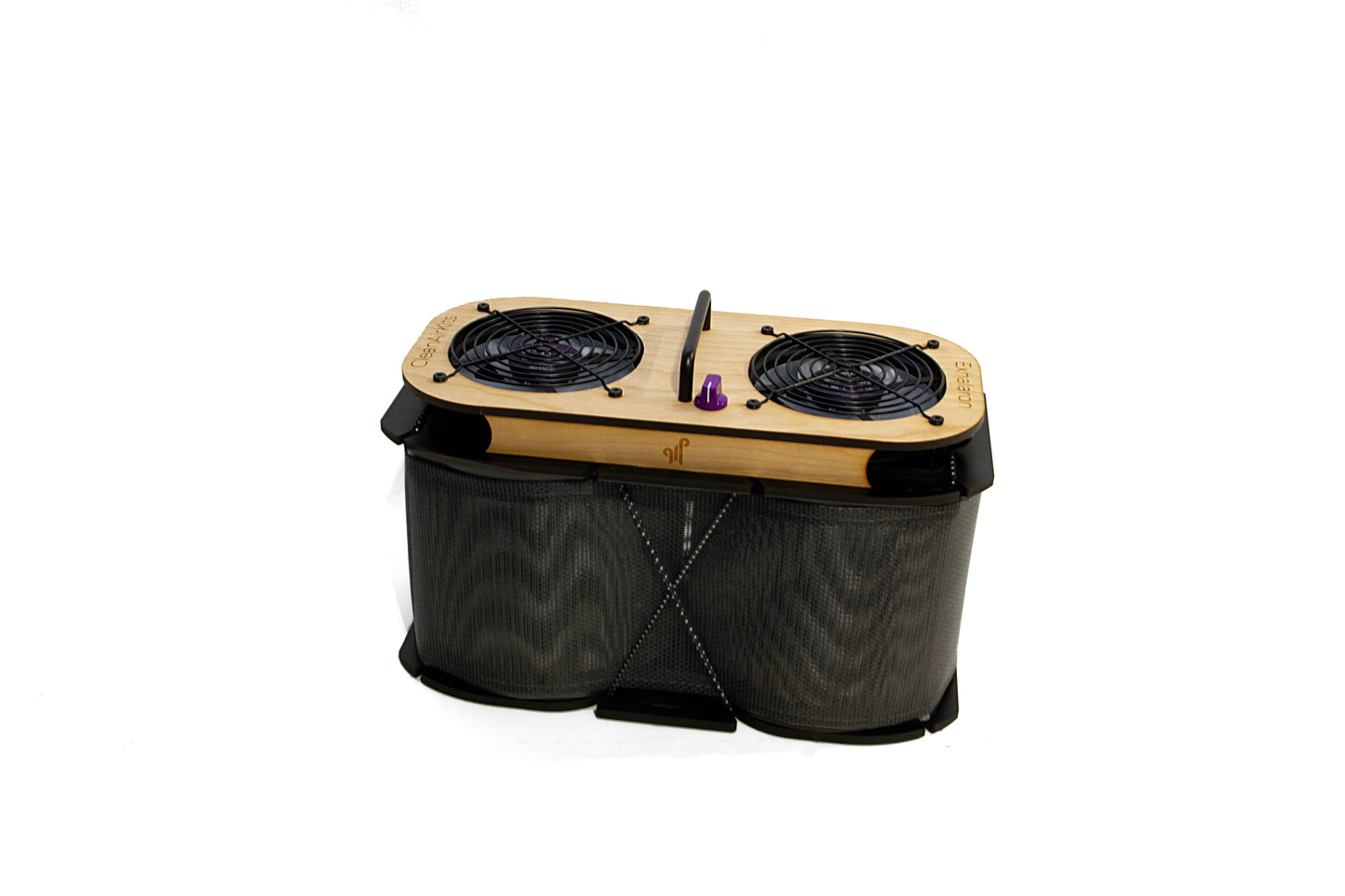
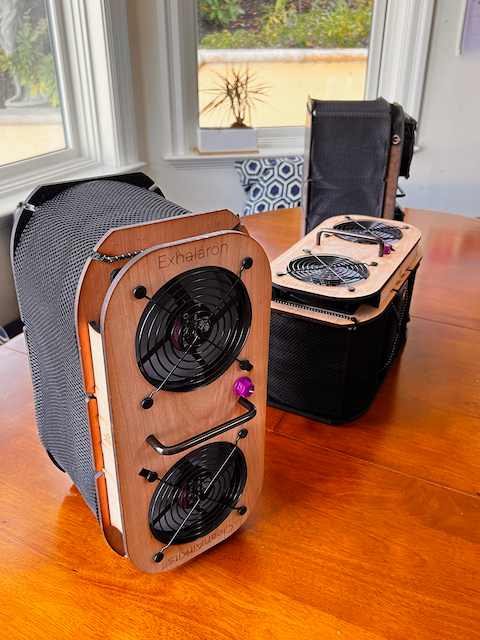
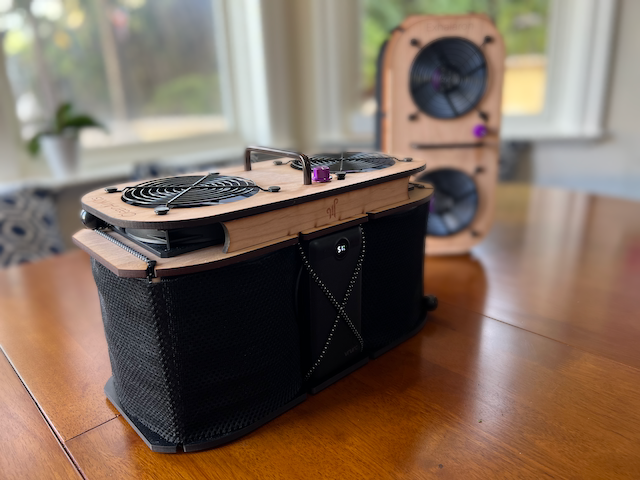
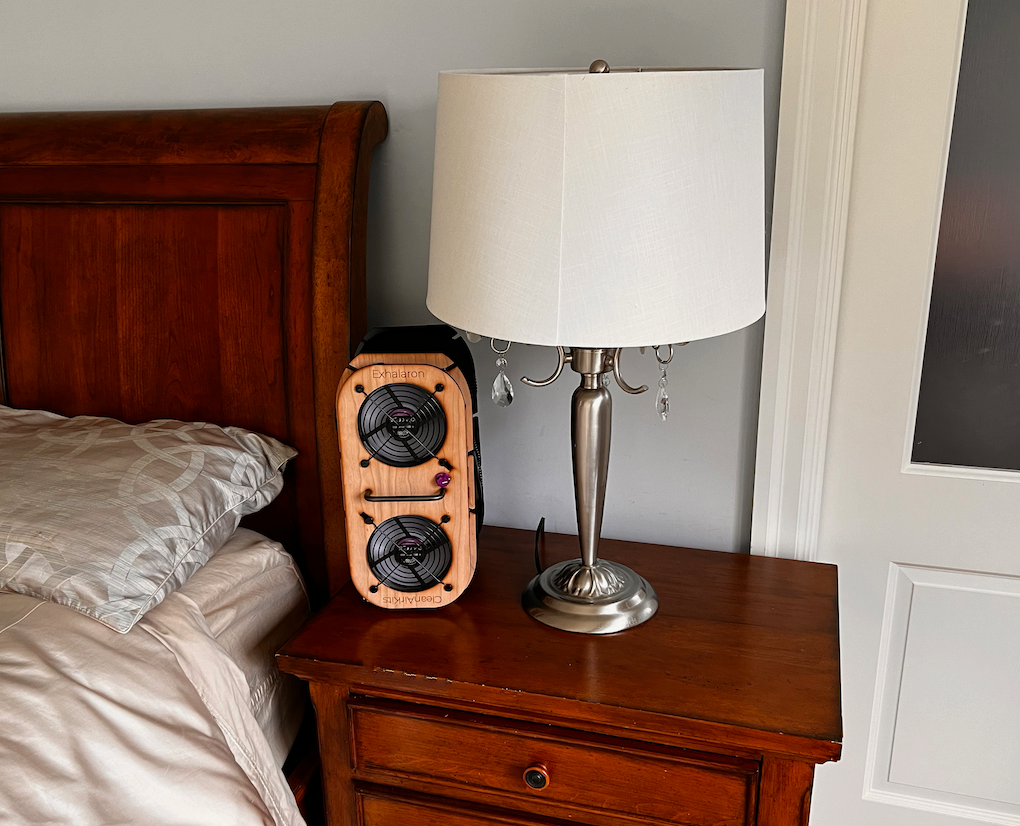
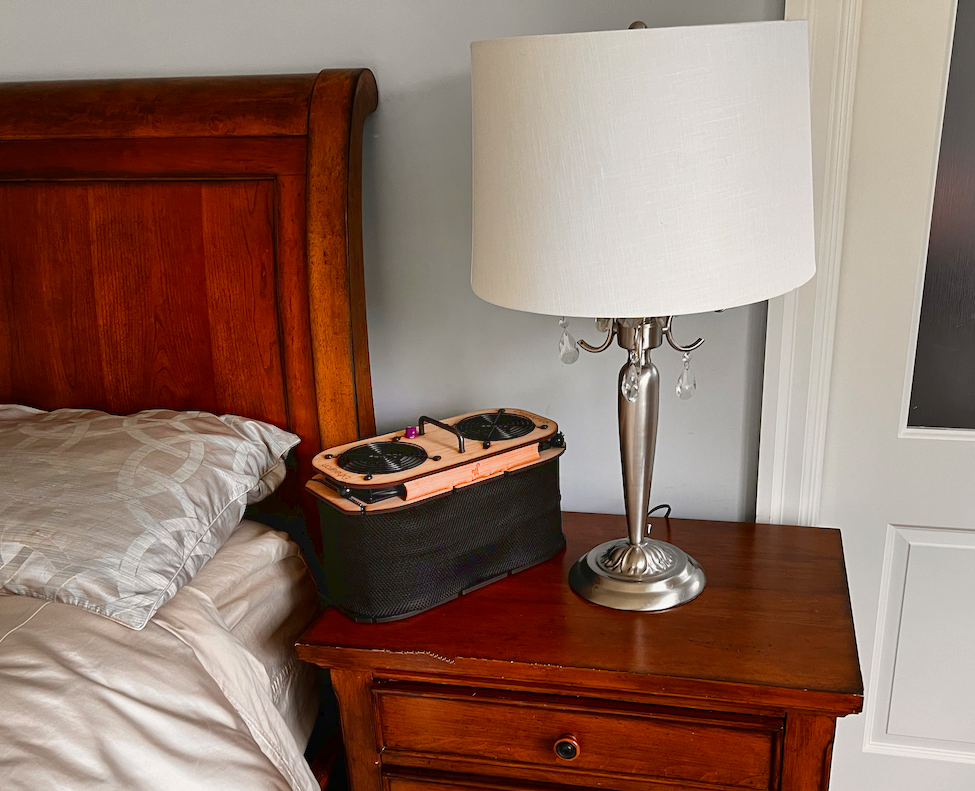
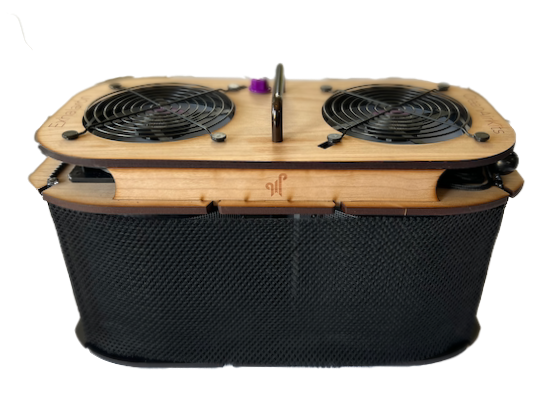
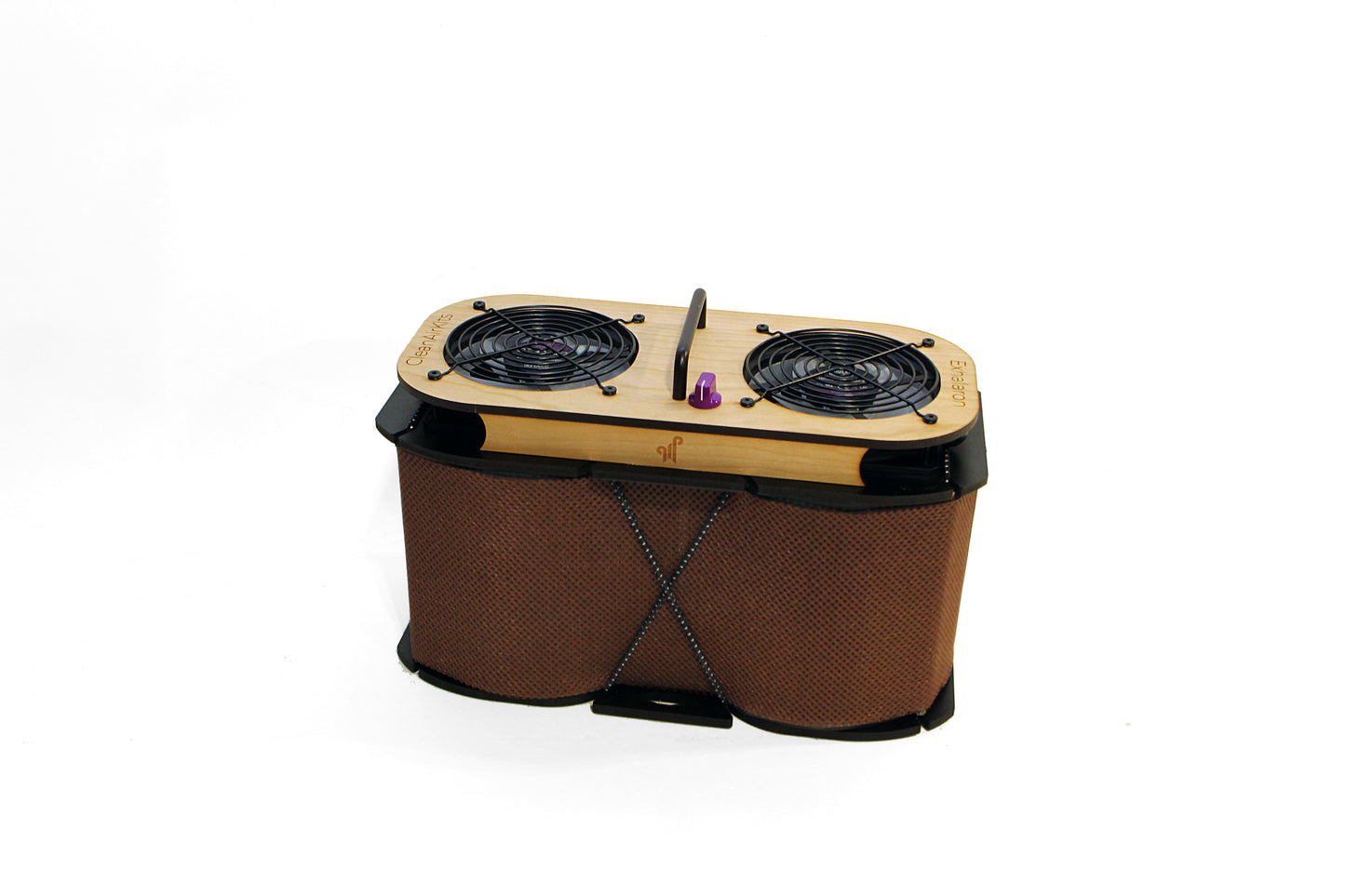
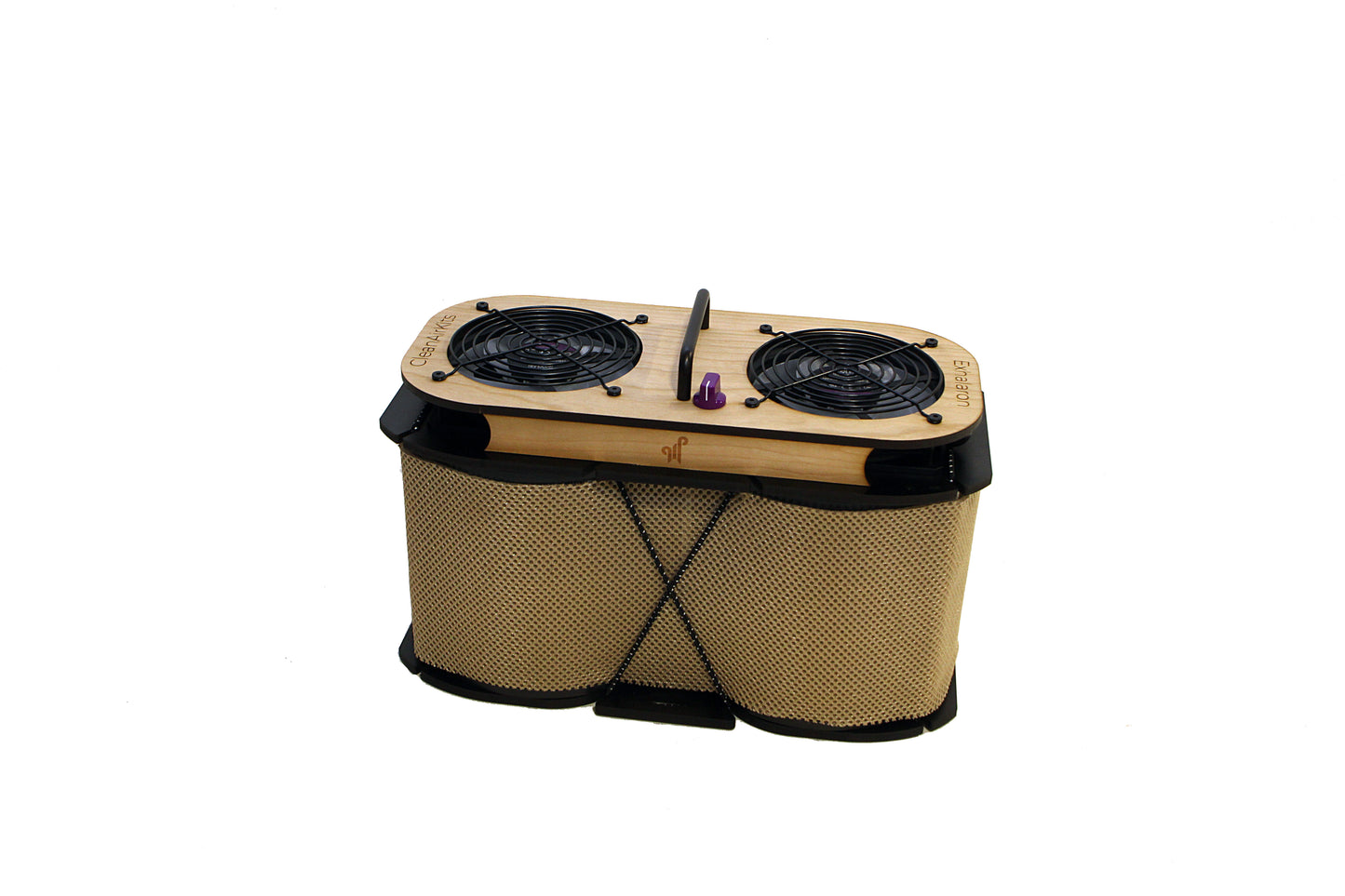
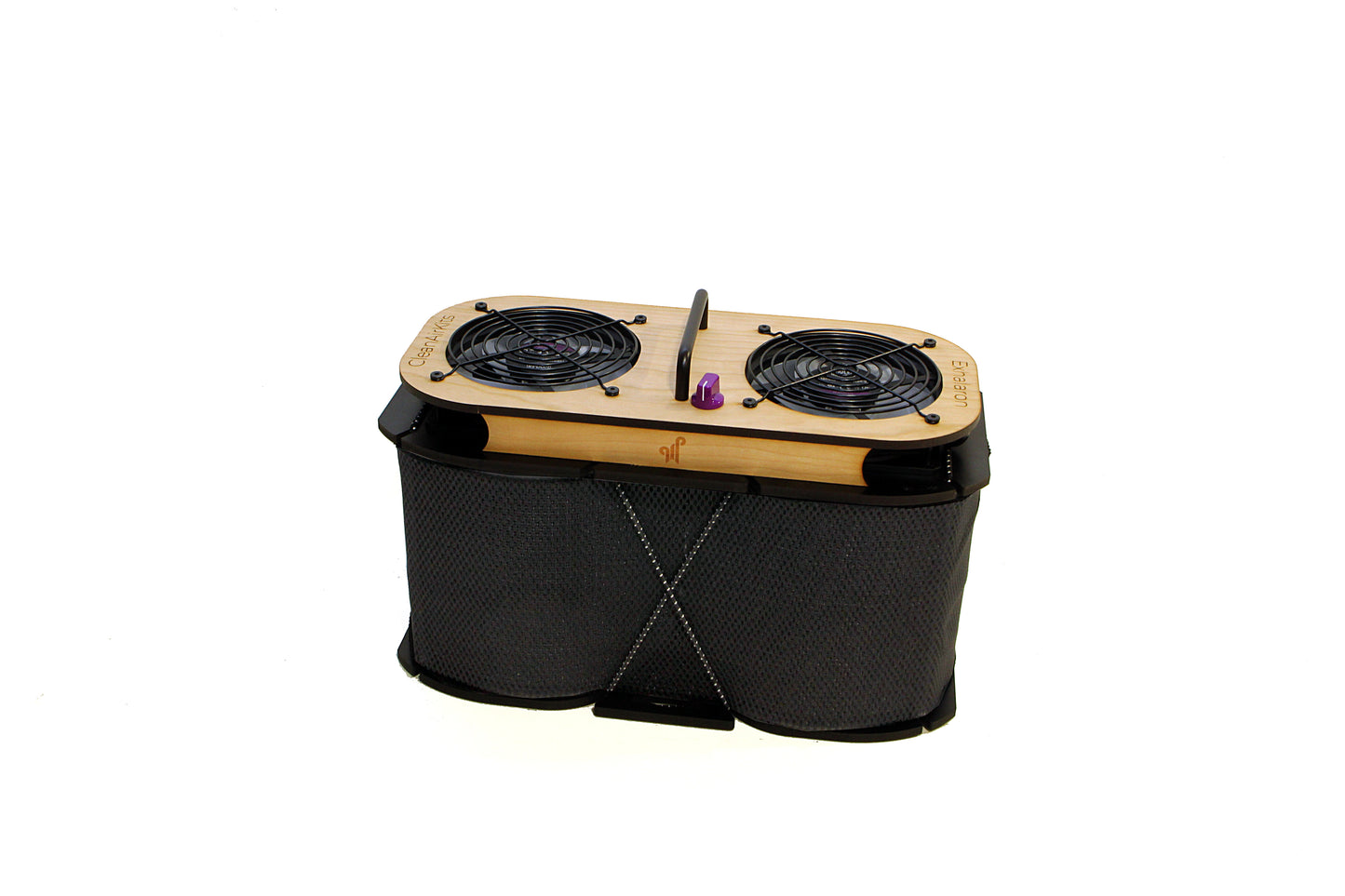
- Exhalaron: 92 CFM at 34 dB, quiet enough for a nightstand, desk or meeting table, and it runs on a USB-C power bank.
Here's how many clean air changes per hour each one adds to typical rooms with 8 ft ceilings, on top of whatever your ventilation already provides:
| Room | Exhalaron | Luggable Ultra (5-fan) | Luggable XL Ultra or Purifying Table |
|---|---|---|---|
| Bedroom, 12 × 12 ft | 4.8 | 15 | 21 |
| Living room, 15 × 20 ft | 2.3 | 7.3 | 10 |
| Open-plan area, 20 × 30 ft | 1.1 | 3.7 | 5.0 |
| Classroom, 800 sq ft | 0.9 | 2.8 | 3.8 (two units: 7.5) |
The cleaning comes from airflow, not from killing anything. Our purifiers use fans and MERV 13 or H11 filters only, with no ionizers, UV or ozone. See why large MERV 13 filters clean a room faster than typical HEPA purifiers.
How to get the most protection
- Run it continuously. Virus keeps arriving as long as someone infectious is breathing, often before they have symptoms. A purifier switched on after someone feels sick has already missed the early, most contagious days.
- Size for the room, then add more where people gather. Aim for at least 5 air changes per hour, and more in bedrooms and rooms where people spend hours together. Our Air Purifier Planner works out what you need.
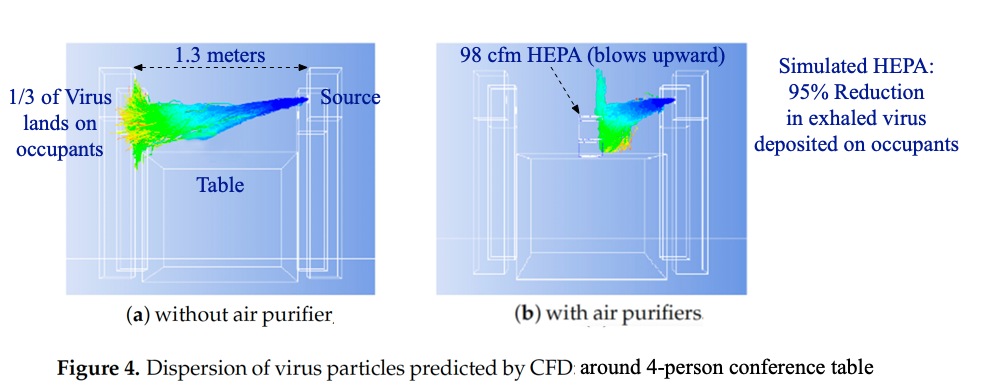
- Put clean air where people breathe. A purifier between people, such as an Exhalaron on a table, catches exhaled air before it reaches others. In one study of a four-person table, a purifier of this size captured about three quarters of exhalations before they crossed the table.
- When someone in your household is sick, run a purifier in their room with the door closed and another in shared spaces, so less virus escapes into the rest of the home.
- Layer it. Clean air lowers the amount of virus in a room, but it isn't a substitute for a well-fitted N95 mask in close, face-to-face contact with someone who is sick. Opening windows, staying home when sick and testing all add protection.
Frequently asked questions
Can an air purifier stop me catching a cold or the flu?
No purifier can guarantee that. What it does is lower the amount of virus floating in the room, so you breathe in less of it. Less virus means a lower chance of infection, which is why reaching high cleaning rates matters so much.
Are MERV 13 filters fine enough to catch viruses?
Yes. Viruses travel through the air inside particles of breath, saliva and mucus, mostly larger than the virus itself, and MERV 13 filters catch most of these on each pass. ASHRAE 241 rates purifiers on how much of these infectious aerosols they remove, and because our purifiers move so much air, they remove more per minute than most HEPA purifiers at the same noise level.
Does it help in a classroom or office?
Yes, and that's where many of our purifiers are used. Many older classrooms get only 2 to 3 air changes per hour, and one or two Luggable XL Ultras can bring them to 5 to 10. See our classroom air purifiers.
How many purifiers do I need?
For a room, aim for at least 5 air changes per hour, or 30 CFM of clean air per person, whichever is more. The Air Purifier Planner does the math for each room, and our Sizing Guide explains it in detail.
Find the right purifier
- Air Purifier Planner
- Shop all purifiers
- Classroom air purifiers
- How to avoid getting sick at college
- A teacher with long COVID gets cleaner air
References
- Wang, Prather, Sznitman, Jimenez, Lakdawala, Tufekci and Marr (2021), Airborne transmission of respiratory viruses, Science
- Cordery et al. (2022), Frequency of transmission, asymptomatic shedding, and airborne spread of Streptococcus pyogenes in schoolchildren exposed to scarlet fever, The Lancet Microbe
- Buonanno, Ricolfi, Morawska and Stabile (2022), Increasing ventilation reduces SARS-CoV-2 airborne transmission in schools: a retrospective cohort study in Italy's Marche region, Frontiers in Public Health
- U.S. CDC, How much ventilation is enough? Aim for 5 air changes per hour
- ASHRAE Standard 241-2023, Control of Infectious Aerosols
- Zhai et al. (2021), tabletop air purifier study, ASHRAE Journal


Exhalaron Personal Portable Air Purifier